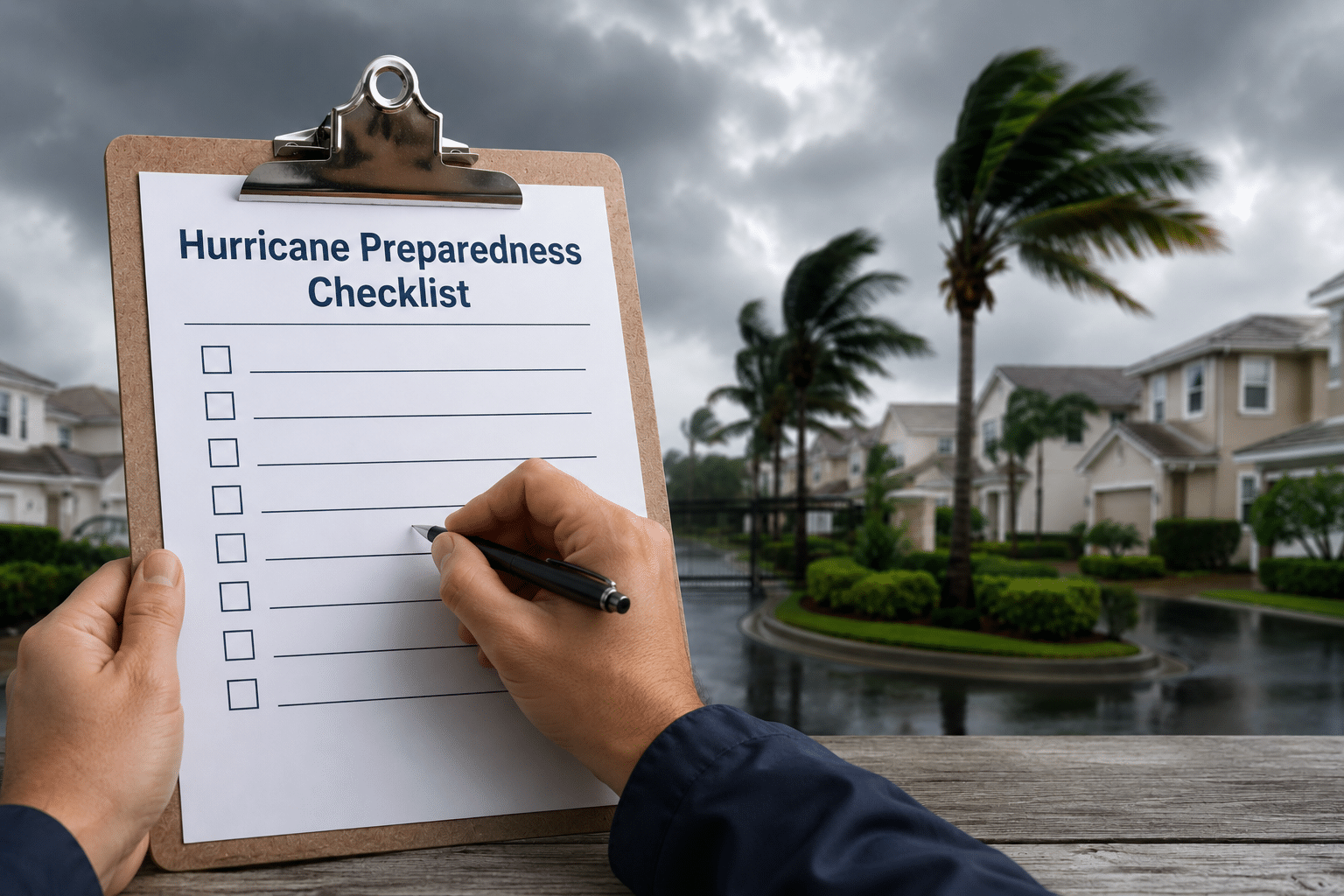
Hurricanes often bring unpredictable damage to homes in Florida. Communities need to be prepared before hurricanes hit the Gulf. For Bonita Springs communities, hurricane preparedness is about protecting residents, preserving community assets, coordinating vendors, and having a clear recovery plan if any damage occurs.
In this blog, we will talk about preparedness checklists that can help HOA and COA boards stay organized before, during, and after a storm.
Why Hurricane Preparation Matters for HOA and COA Communities
HOA and COA communities are responsible for handling every in and out of the communities they manage. While no board can prevent severe weather, proactive preparation can reduce its impact:
Well-prepared communities often experience:
- Faster recovery after storms
- Improved resident safety
- Less damage to common areas
- Better communication during emergencies
- Fewer disruptions to community operations
For HOA boards, preparation is one of the most important responsibilities of community leadership, and earlier planning always gives the upper hand when storms threaten the area.
Pre-Season Planning Checklist
Preparation should begin long before hurricane season reaches its peak.
a) Review Emergency Response Plans
Every HOA and COA should have a documented emergency response plan that outlines responsibilities, communication procedures, emergency contacts, and post-storm recovery processes.
b) Update Resident Contact Information
Outdated contact information can create significant communication challenges during emergencies. Verify phone numbers, email addresses, and emergency contacts annually.
c) Review Insurance Policies
Boards should work with insurance professionals to review community coverage, deductibles, and reporting requirements before hurricane season begins.
d) Identify Emergency Vendors
Establish relationships with vendors who may be needed after a storm, including:
- Debris removal companies
- Tree service providers
- Roofing contractors
- Restoration specialists
- Security providers
e) Confirm Backup Contractors
After major storms, contractor availability can become limited. Having backup vendors identified in advance can help avoid delays.
f) Review Emergency Budgets
Check reserve funds and emergency spending procedures so the board can respond quickly if repairs become necessary.
Property Inspection Checklist
Routine inspections are one of the most effective forms of hurricane preparedness.
a) Roofing Inspections
Loose materials, damaged flashing, and aging roof systems can become serious vulnerabilities during high winds.
b) Drainage Systems
Inspect storm drains, retention areas, culverts, and gutters to ensure water can flow properly during heavy rainfall.
c) Landscaping and Tree Trimming
Overgrown trees and weak branches are common causes of storm-related property damage. Regular trimming can reduce risks.
d) Clubhouse and Amenity Inspections
Pools, clubhouses, fitness centers, playgrounds, and other amenities should be inspected for maintenance issues before hurricane season.
e) Exterior Lighting, Signage, and Fencing
Loose signs, damaged fencing, and unstable lighting fixtures can become hazards during severe weather, and addressing these issues early helps to reduce potential damage.
Resident Communication Checklist
Even the best emergency plan is not effective if residents don’t know what to expect.
a) Update Communication Channels
Ensure that all communication systems are functioning properly, including:
- Community websites
- Resident portals
- Email notification systems
- Text alert platforms
- Social media channels
Share Preparedness Reminders
Residents should receive guidance on securing personal property, understanding community procedures, and preparing their homes.
b) Provide Evacuation Information
Communities should share local evacuation zone information and emergency resource contacts before storms become imminent.
c) Set Expectations
Clearly explain what services the community can and cannot provide before, during, and after a hurricane.
Consistent communication helps to reduce confusion and build confidence within the community.
Storm Preparation Checklist When a Hurricane Is Approaching
Once it appears that a storm is likely to impact Southwest Florida, communities should begin implementing their storm preparation checklist.
a) Secure Outdoor Furniture and Equipment
Pool furniture, decorative items, maintenance equipment, and loose objects should be secured or stored.
b) Protect Common Areas
Board members and management teams should coordinate efforts to secure clubhouses, recreation facilities, gates, and other shared spaces.
c) Coordinate Vendors
Confirm contractor availability and review emergency response plans with key service providers.
d) Monitor Weather Updates
Boards should stay informed through official weather sources and local emergency management agencies.
e) Notify Residents
Provide regular updates regarding community operations, closures, preparation requirements, and emergency procedures.
f) Document Property Conditions
Photographs and video documentation of common areas before the storm can help support insurance claims if damage occurs.
Post-Storm Recovery Checklist
The recovery process begins as soon as conditions are safe.
a) Conduct Initial Safety Assessments
Inspect community roads, buildings, utility systems, and amenities for immediate safety concerns.
b) Assess Property Damage
Document damage thoroughly before major cleanup efforts begin.
c) Coordinate Debris Removal
Removing debris quickly can help restore access and improve safety throughout the community.
d) Maintain Insurance Documentation
Detailed records, photos, invoices, and contractor reports may be needed during the claims process.
e) Communicate Frequently with Residents
Residents will want updates regarding repairs, timelines, amenity closures, and recovery efforts.
f) Develop Long-Term Repair Plans
Some storm-related repairs may take months to complete. Transparent communication helps to manage expectations and maintain trust.
How Professional HOA and COA Management Supports Hurricane Preparedness
Experienced community association management professionals help communities develop emergency plans, coordinate vendors, communicate with residents, maintain documentation, and oversee recovery efforts after storms.
Professional management can also help boards to stay organized throughout hurricane season by ensuring that preparedness efforts remain a year-round priority rather than a last-minute response.
Preparing Today Helps Protect Tomorrow
For Bonita Springs HOA and COA communities, hurricane preparedness is an ongoing process, not a single task completed at the start of the season. Communities that plan are often better positioned to protect residents, reduce damage, and recover more efficiently when severe weather occurs.
If your community is reviewing its emergency preparedness strategy, Compass Rose Management can provide expert guidance and support to strengthen emergency planning, resident communication, vendor coordination, and post-storm recovery efforts.
Contact our team today to learn how professional HOA management in Naples, Bonita Springs, Estero, Ft. Myers, Cape Coral and Punta Gorda can help your community stay prepared year-round.